
Dawn — Senior Seller Finance Note Advisor & Analyst
Moxxie Asset Group · Ft. Lauderdale, FL
Key Takeaways
- →You don’t have to pay off your mortgage first. A wrap mortgage lets you seller finance while your existing loan stays in place.
- →You keep the difference. Your buyer pays you, you pay your mortgage, and the spread is your monthly income.
- →The due-on-sale clause is real but rarely enforced when payments stay current. If it ever is, selling your note can pay off the underlying loan.
- →Run it like a bank. A loan servicer, proper disclosures, insurance, title, and clear payment rules protect you and your note’s value.
If you’d like to sell your property with seller financing but you still have a mortgage on it, you may assume you’re out of luck. Most homeowners believe the house has to be paid off before they can offer financing to a buyer. In many cases, that isn’t true. By the end of this article, you’ll understand how a wrap mortgage lets you seller finance with your loan still in place, what risks to plan for, and how to set one up the right way.
FACT: You Don’t Have to Pay Off Your Mortgage First
When we tell sellers they can keep their current mortgage and still sell with seller financing, the first reaction is almost always surprise. They thought their property had to be free and clear. The tool that makes it possible is called a wrap mortgage, or wraparound mortgage.
In a wrap, you sell your home and transfer ownership to the buyer, but your existing underlying mortgage stays in place. The buyer signs a new, larger note with you, and that new note "wraps around" your original loan. Each month, the buyer pays you, you continue paying your original mortgage, and you keep the difference.
It works a lot like collecting rent, with one big difference. The buyer owns the home, so property taxes, insurance, and maintenance become their responsibility, not yours.
How the Numbers Work:
Say your home sells for $400,000, and you still owe $100,000 on a mortgage at 5%. Your buyer puts down $40,000 and signs a $360,000 note with you at 9%. Assuming 30-year terms on both loans, your buyer pays you about $2,896 a month. You pay your original mortgage of about $537 a month, and you keep about $2,360 every month.
There’s a built-in bonus, too. If your original mortgage has only a few years left, it gets paid off long before your buyer’s note does. From that point on, you keep 100% of your buyer’s payment for the rest of the term. Some sellers choose to add a balloon payment so they’re paid off sooner, but in most cases, you’ll earn more over time by continuing to collect payments and interest for as long as possible.
Who Benefits Most From a Wrap:
Wraps can work well for several kinds of sellers. If you locked in a low interest rate years ago, a wrap lets you keep that low-rate loan while charging your buyer a higher rate, and the spread becomes your income. If your house has been sitting on the market, offering seller financing opens the door to buyers who can’t qualify for a bank loan, such as self-employed business owners or people who work in cash-based businesses. And if you don’t have enough equity to sell the traditional way after closing costs, a wrap may let you sell without bringing cash to the table.
For sellers with very little equity, there’s one thing to keep in mind. If you ever decide to sell your note, the underlying mortgage has to be paid off first. With little equity, a note sale may not bring in enough to cover it at first, so your option to cash out may be limited until you’ve built more equity through payments.
Setting the Right Interest Rate:
Seller financing usually serves buyers who don’t fit the box banks require. That doesn’t make them bad borrowers, but it does mean more risk for you as the lender. For that reason, seller-financed notes are typically set at 3% to 6% above current bank rates. Some states limit how much interest a private lender can charge, so have your RMLO confirm that your rate falls within your state’s legal limits.
What About the Due-on-Sale Clause?
Most mortgages include a due-on-sale clause, which gives the lender the right to demand the full loan balance when ownership of the property changes. It’s important to understand, and it’s the biggest reason sellers hesitate.
In practice, lenders rarely enforce it as long as the payments keep arriving on time and in full. In a wrap, you’re the one making those payments, so you stay in control. You also have every reason to pay on time. If your original mortgage went unpaid, the lender could foreclose, and you’d lose the property that backs your buyer’s note.
And if a lender ever did call the loan due, you still have a way out. You can sell your note and use the proceeds to pay off the original mortgage. A note usually sells for less than its full balance, but a well-built note like the one in our example would typically sell for far more than the $100,000 needed to clear the underlying loan.
Always Disclose the Underlying Mortgage to Your Buyer:
In our experience - many sellers don’t tell their buyer that the original mortgage is staying in place. We always recommend that you do, in writing, before closing. Your buyer deserves to know, and in some states it’s required by law. Texas, for example, requires specific written notices when a home is sold with an existing loan left in place, and wrap transactions there have additional rules. Disclosure requirements vary by state, so always check your state’s laws and work with a real estate attorney. In some cases, it’s wise for the buyer and seller to each have their own attorney.
Proper disclosures protect everyone. They protect your buyer, they protect you, and they protect your note’s value if you ever decide to sell.
Run Your Wraparound mortgage Like a Bank Would:
Most of the notes Moxxie Asset Group buys are wraps, so we see what works and what doesn’t. The sellers who run into trouble usually aren’t doing anything dishonest. They simply aren’t treating their role as a business.
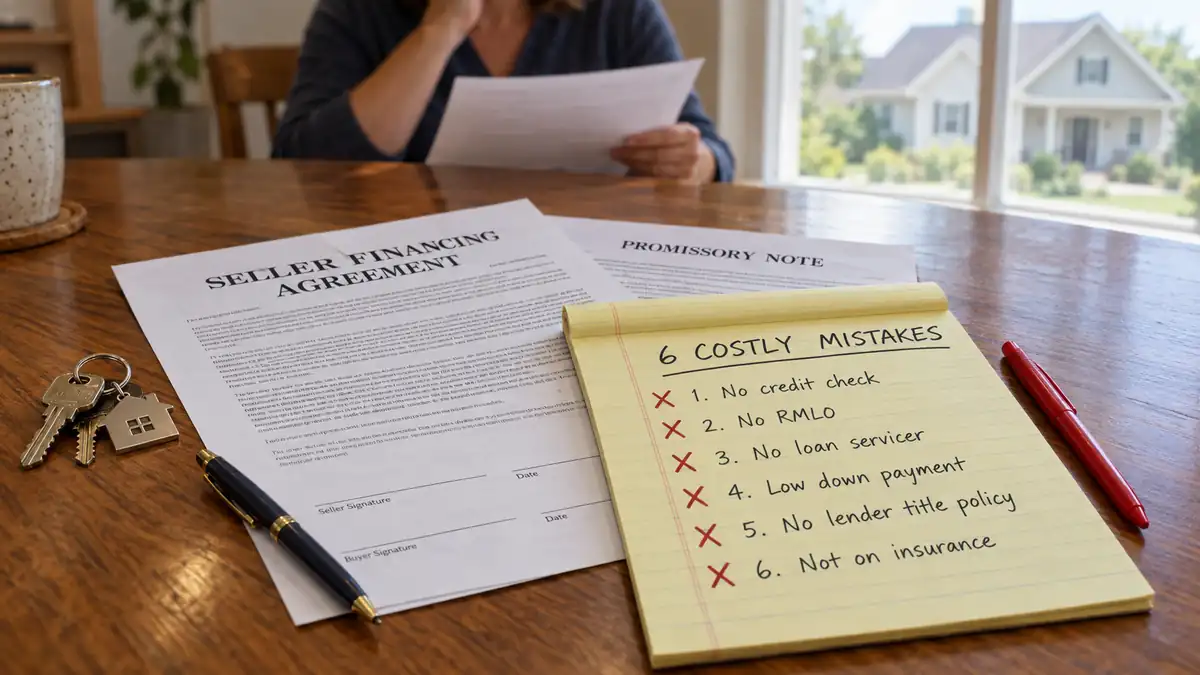
One common mistake is collecting payments directly through apps like Zelle, Cash App, or Venmo. Those payments are hard to verify and track when it’s time to sell the note. A better approach is a third-party loan servicer that collects your buyer’s payment, pays the underlying mortgage, and pays the property taxes and insurance on time, so nothing falls through the cracks and both sides can see that every bill is being paid.
Other costly mistakes include disorganized paperwork and poor record keeping, skipping a lender’s title policy, and not requiring the buyer to carry their own homeowners insurance with you listed as the loss payee. Many sellers also skip a late payment policy, or let late payments slide because the buyer is "a good person." A kind borrower is wonderful, but clear rules and boundaries are what keep a note strong.
Being a note holder means stepping into the role of the bank. The more your wrap looks like a bank would run it, the safer your income and the more your note will be worth.
Two Very Different Stories
We hear from wrap note holders in very different situations. Some come to us because the underlying mortgage went unpaid and is now in foreclosure, and they’re hoping a note sale can save the deal. Those situations are stressful and much harder to resolve.
Most, though, come to us from a position of strength. Their wrap has been running smoothly, the underlying mortgage has been paid on time, and they’re ready to put their money to work somewhere else, whether that’s a new investment, a major purchase, or simply peace of mind. When their note sells, the underlying mortgage is paid off from the proceeds, and they walk away with the rest.
The difference between those two stories almost always comes down to how the wrap was set up and managed from the start.
The Bottom Line
You don’t need to own your property free and clear to sell it with seller financing. A wrap mortgage lets you keep your existing loan, collect a higher payment from your buyer, and keep the difference as monthly income. Disclose the underlying mortgage, follow your state’s rules, use a loan servicer, and run your note like a bank would, and you’ll have a strong, valuable asset you can hold or sell when the time is right.
Thinking about selling your property with a wrap? Talk to us before you close. We’ll help you structure a strong note and, once your buyer’s information is in, tell you what your note could sell for. Give us a call at 954-466-7111 or fill out our free online note review.
📞 954-466-7111
🌐 www.MoxxieAssetGroup.com
This article is for educational purposes only and is not legal, tax, or financial advice. Wrap mortgage and disclosure laws vary by state. Consult a real estate attorney and a licensed RMLO before entering into any seller-financed transaction.
Moxxie Asset Group:
THE Source for Seller Financed Note Education
Illuminating the Blind Spots of Your Seller Financed Note Journey